
Security awareness training teaches employees how to identify and report cyber threats like phishing and social engineering. Over 90% of security breaches happen because of human actions, whether that is clicking a suspicious link, sharing login details, or following a fraudulent request. Technical tools like firewalls and multi-factor authentication are necessary, but they cannot stop a person from being tricked into opening the door for a hacker. This training fills that gap by building better habits through practice and feedback.
Why Technology Alone Does Not Stop Phishing
Hackers do not target your servers. They target your people. They send clever messages that look like they come from a boss, a bank, or a vendor, and they create a sense of urgency to make people act before they think. Without clear guidelines, even the best infrastructure stays vulnerable.
Common tactics include:
- Email phishing: Fake emails that lead to stolen login pages
- Smishing: Phishing through text messages
- Vishing: Phone scams where someone pretends to be an authority figure
- Pretexting: Building trust over time before asking for a favour
Because these attacks target people rather than servers, employee awareness is a mandatory layer of defence.
What Is an Effective Security Awareness Program?
A good programme combines three things: structured lessons, phishing simulations, and progress tracking. Together, these move training from a one-time event into a long-term strategy.
What Does Security Awareness Training Cover?
Training should be quick and easy to understand, built around real-world situations rather than technical jargon. Lessons cover how to spot fake emails, how to use passwords safely, and how to report suspicious activity. Bite-sized modules work best because they keep people engaged and help them remember what they learned.
What Are Phishing Simulations and How Do They Work?
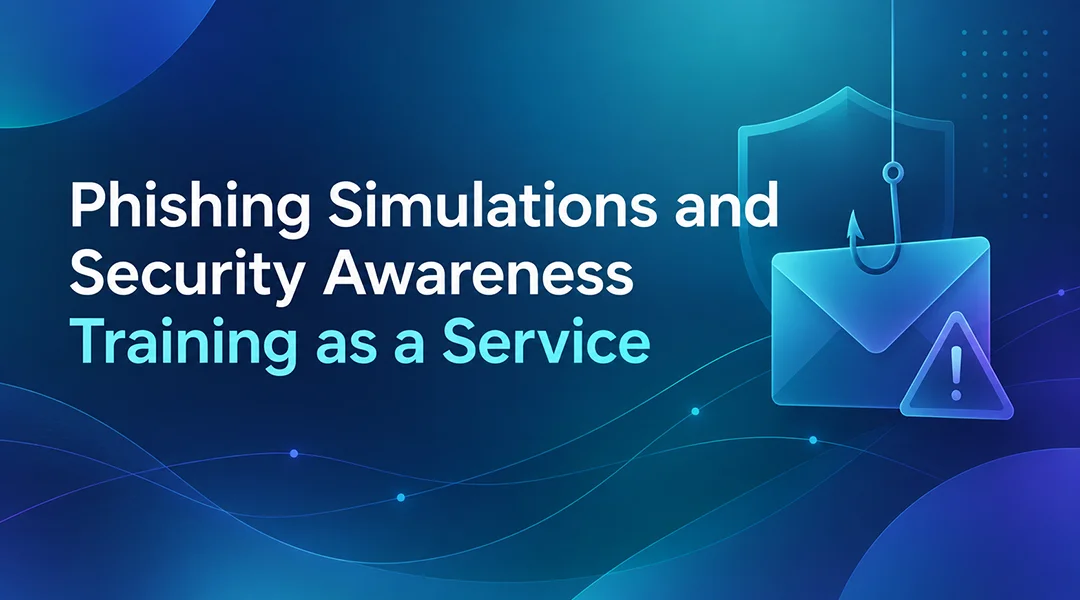
A phishing simulation is a controlled test in which employees receive a realistic fake phishing message to see how they react in a safe environment. If a user clicks the link, they get immediate feedback on what to look for next time. There is no punishment. The goal is to turn a mistake into a learning moment.
How Is Security Awareness Measured?
Good programmes use dashboards to track who is clicking links and which departments need more support. That data turns a one-time lesson into a long-term strategy and also serves as documented proof of compliance with regulations like GDPR or NIS2.
How Does Repetition Strengthen Secure Behaviour?
Security is a skill that requires practice. By using different scenarios and easy reporting tools, employees develop better reflexes over time. They stop being a target and start being a defence.
What Should Employees Be Able to Do After Training?
The real measure of a programme is whether it changes how people work day to day. After training, employees should be able to:
- Recognise manipulation tactics across email and phone
- Verify unusual requests before acting on them
- Handle sensitive data with care
- Report suspicious activity through the right channels
The real goal is making secure habits part of the daily routine.
What Is the Business Value of Security Awareness Training?
Beyond reducing risk, this training supports business continuity and regulatory compliance. For companies subject to NIS2 or GDPR, documented training provides the evidence needed to show that human risk is being managed seriously. Organisations that train regularly see fewer stolen credentials and fewer costly errors. It closes the gaps that technology alone cannot.
FAQ
What is security awareness training?
It is a programme that teaches staff to spot and handle threats like phishing. It reduces the chance of a security breach caused by human error.
Why is phishing still effective?
Phishing targets people, not computers. If an employee is tricked into giving away a password, every firewall in place is bypassed in an instant.
How long does training take?
Most lessons take 5 to 15 minutes. Employees can complete them at their own pace.
How often should you run simulations?
Monthly or quarterly testing is ideal. Frequent practice keeps everyone alert.
What happens if an employee fails a test?
They get instant feedback explaining what they missed. The focus is on education rather than blame to encourage better reporting.
Does this help with NIS2 or GDPR?
Yes. Both require companies to manage human risk. Documented training shows that those obligations are being taken seriously.
Is this only for IT staff?
No. This is specifically for non-technical staff. The biggest risks often sit with the people who handle daily communications and finances.