In recent years, Belgium has experienced a significant rise in cyber threats, with phishing attacks posing a growing threat to individuals and businesses alike. As per recent data, the amount stolen through phishing in Belgium has seen a sharp increase. In 2021, approximately 25 million euros were stolen through phishing, but this number rose to a staggering 39.8 million euros in the following year. While the numbers are concerning, it’s equally disconcerting that a portion of the Belgian population remains unfamiliar with the concept of phishing and cyber threat protection in Belgium.
What Is Phishing and Why Is It Relevant for Belgian Businesses?
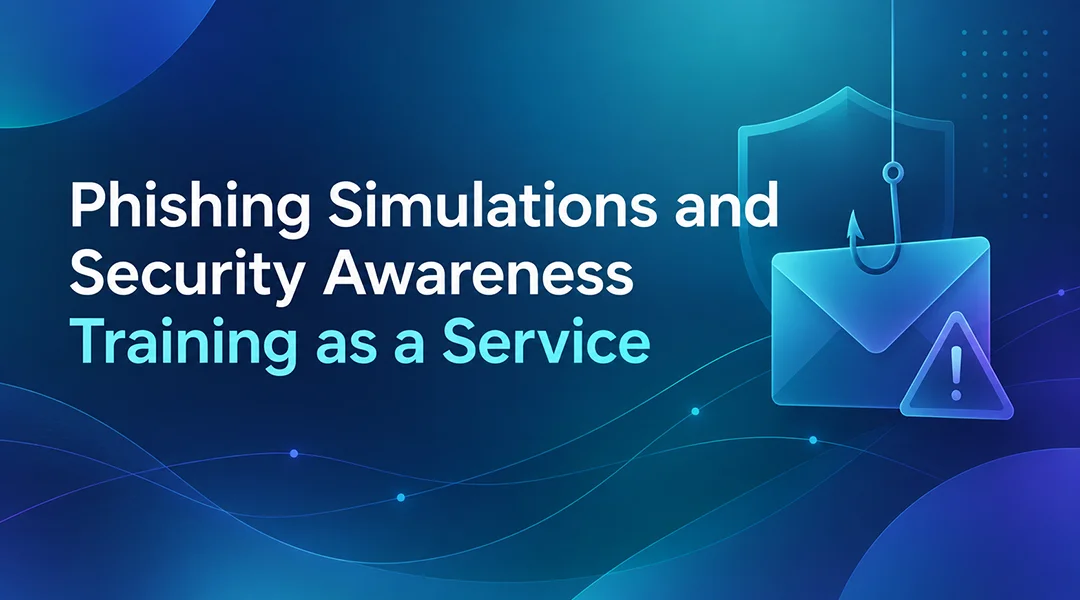
Phishing is a type of cyberattack in which individuals or organizations are deceived into revealing sensitive information -such as login credentials or financial data typically through fraudulent emails, messages, or websites. It is relevant for Belgian businesses because it is a growing and financially measurable threat. The sharp year-on-year increase in stolen funds demonstrates that phishing is not a static risk but an actively escalating one. Businesses that do not address it face both financial and reputational consequences.
Practical example: An employee at an SMB receives an email that appears to come from their bank, requesting urgent login verification. Without prior phishing awareness training, the employee follows the link and enters their credentials on a fraudulent site giving an attacker direct access to business banking systems.
What Steps Can Businesses Take to Protect Themselves From Cyber Threats?
Why Is Employee Education the First Line of Defense?
- Security awareness training is a structured program that teaches employees to recognize and respond to cyber threats such as phishing and social engineering. It is used when an organization wants to reduce the risk of human error leading to a security breach.
- The original article identifies two specific areas where employee awareness should be built: recognizing phishing and social engineering attempts, and understanding best practices for password security, data classification, and physical security.
- A security awareness training program includes bite-sized, continuous training modules and phishing simulations to keep employees prepared against evolving threats.
Practical example: A company runs monthly simulated phishing emails through their security awareness platform. Employees who click the fake link receive immediate in-platform feedback explaining what to look for. Over time, the click rate on simulated phishing emails decreases, indicating improved awareness across the organization.
How Do Weak Passwords Increase Cybersecurity Risk?
- Weak passwords increase the risk of unauthorized access to sensitive information. A password manager is a tool that generates and stores complex passwords securely, eliminating the need for users to remember them manually.
- A password manager is used when an organization wants to enforce strong, unique passwords across all systems without relying on employees to create and manage them individually.
- Bitwarden is a specific password management tool designed to simplify and strengthen password security for businesses. It can be self-hosted within a company’s own secure network, providing complete control over where password data is stored and how it is accessed.
Practical example: A team of 30 employees shares access to several SaaS platforms. Without a password manager, employees reuse simple passwords across multiple services. With Bitwarden deployed, each platform gets a unique, auto-generated password stored centrally reducing exposure if one service is compromised.
How Does Email Security Reduce Phishing Risk?
- Email security in the context of cyber threat protection refers to a set of measures that protect organizational mailboxes from malicious attacks, phishing attempts, and ransomware. It works by encrypting emails in transit and applying protective filters that detect and block suspicious messages before they reach employees.
- Email security is used when an organization wants to reduce the volume of phishing and malicious content that reaches employee inboxes, lowering the chance of a successful attack.
What Is the Broader Implication for Individuals and Businesses in Belgium?
As cyber threats continue to develop, proactive cybersecurity measures have become a requirement rather than an option for Belgian businesses and individuals. Increased awareness and education are identified in the original article as the first steps toward building a safer digital environment.
The Belgian government has recognized the scale of the problem and has taken steps to address it at a national level, though the article does not specify those measures in detail.
FAQ: Cyber Threat Protection in Belgium
1. How much was stolen through phishing in Belgium in the year following 2021? According to the original article, approximately 39.8 million euros were stolen through phishing in Belgium in the year after 2021, up from approximately 25 million euros in 2021.
2. What percentage of Belgian young people have never heard of phishing? The article states that 12% of young people in Belgium have never heard of phishing.
3. What is a phishing simulation and how is it used in employee training? A phishing simulation is a controlled, fake phishing attempt sent to employees as part of a training program. It tests whether employees recognize and avoid phishing emails, and provides immediate feedback when they do not. The article references this as part of a security awareness training program.
4. What is Bitwarden and why is self-hosting relevant for businesses? Bitwarden is a password management tool that generates and stores passwords securely. The article notes it can be self-hosted within a company’s own network, giving the organization complete control over its password data rather than storing it on external infrastructure.
5. What are the three proactive steps the article recommends for businesses? Based on the original article, the three recommended steps are: educating employees about threats including phishing and social engineering, using a password manager to manage credentials securely, and implementing email security measures -including encryption and protective filters -to shield mailboxes from attacks.