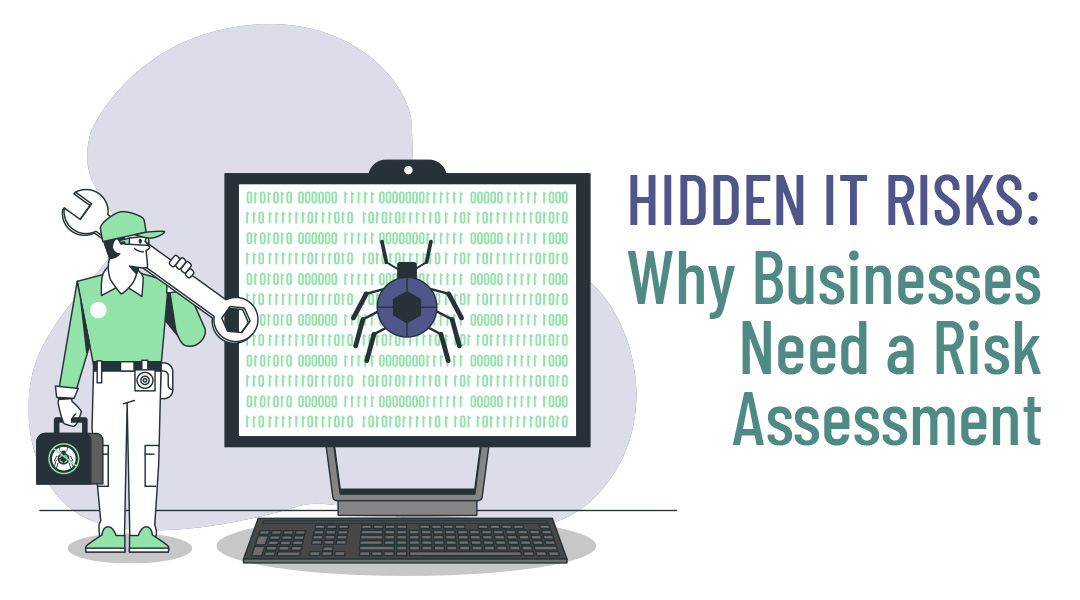
Hidden IT risks are weaknesses in systems, processes, or configurations that are not immediately visible but can lead to security incidents, downtime, or data loss. Businesses need an IT risk assessment to identify these risks before they are exploited or cause operational disruption.
An IT risk assessment provides structured insight into where an organisation is exposed and which risks require attention.
Relying solely on basic IT security measures is no longer enough—cyberattacks are becoming more sophisticated and more frequent. In 2023, the Centre for Cybersecurity Belgium (CCB) recorded a significant increase in cyber incidents – a 142% rise compared to 2022. Many organizations unknowingly operate with gaps in their cybersecurity defenses, exposing themselves to potential breaches. The challenge lies in identifying these hidden vulnerabilities before they lead to costly consequences. This is where a Cybersecurity Risk Assessment proves invaluable. It provides a detailed evaluation of IT infrastructure and potential risks and offers tailored recommendations.
What is a Cybersecurity Risk Assessment?
A Cybersecurity Risk Assessment is a structured process designed to evaluate how well a business is protected against cyber threats. It provides a clear picture of the current IT infrastructure, highlighting vulnerabilities and gaps that could expose the organization to risks. The assessment covers multiple aspects of your business’s security, including:
- Are your data protection and access control policies effective and up to date?
- Is your hardware secure and operating with the latest safeguards?
- Is your software running on patched, supported, and secure applications?
- Do your employees have good security awareness training and are they following safe practices?
Why is an IT risk assessment important for decision-making?
How does it support business decisions?
Without insight into IT risks, decisions are based on assumptions rather than facts.
Risk-based decision-making is prioritising actions based on the likelihood and impact of identified risks.
A risk assessment allows organisations to focus on the most relevant issues instead of reacting to incidents.
Practical IT example
A company has a firewall and antivirus software in place and assumes it is secure. During an IT risk assessment, it becomes clear that several servers are no longer receiving updates and that backups are not tested regularly. These risks were not visible during daily use but represent a serious exposure if an incident occurs.
This example shows how a risk assessment reveals issues that are otherwise overlooked.
Why Every Business Needs One?
No business can afford to overlook cybersecurity. Regular risk assessments ensure your defenses keep up with the latest threats, giving your business the resilience it needs.
A single successful attack can wreak havoc on a business. Financial losses, reputational damage, and operational disruptions are common consequences of cyberattacks.
Every business is unique, with its own set of systems, policies, and challenges. A Cybersecurity Risk Assessment provides tailored recommendations that address specific needs, helping you strengthen weak points in your infrastructure.
By investing in risk assessment, you not only protect your assets but also gain peace of mind knowing your business is well-prepared to face any cybersecurity challenges.
FAQ
What are hidden IT risks?
They are weaknesses in IT systems that are not immediately visible but can cause serious issues.
What is an IT risk assessment?
It is a structured review of an organisation’s IT environment to identify and prioritise risks.
Why are hidden IT risks dangerous?
Because they often only become visible during incidents, when damage has already occurred.
Is an IT risk assessment only about cybersecurity?
No. It also covers availability, backups, access control, and operational continuity.
How often should a risk assessment be done?
Regularly, and whenever significant changes occur in the IT environment.
How can ITAF help?
At ITAF, we’ve developed Risk Assessment to help businesses identify and address gaps in their IT security. This process makes cybersecurity manageable by offering actionable insights tailored to your specific needs. Here’s how it works:
We start with a consultation—either in person or over a call—to understand your operations, goals, and existing IT setup.
Our specialist conducts a detailed infrastructure review through sets of questions evaluating your IT systems, ensuring all critical areas of cybersecurity are addressed. This includes:
- Infrastructure Security
- Identity and Access Management
- Endpoint Security
- Data Protection
- Employee Awareness
- Governance and Policies
Based on our review, we identify areas needing improvement, highlighting missing layers of protection, outdated practices, or insufficient tools. Each gap is clearly mapped to potential threats, giving you a clear picture of your risks.
Finally, you receive a detailed report with prioritized recommendations. From enhanced firewalls to endpoint protection or improved backup strategies, our solutions are customized to your business’s needs.
Identifying vulnerabilities early allows you to address risks before they are exploited by cybercriminals. Preventing incidents like data breaches or ransomware attacks saves money and protects your reputation in the long run. With ITAF’s Risk Assessment, you gain more than just an understanding of your current vulnerabilities—you receive a practical plan to build a resilient and secure IT infrastructure.
To help you gain a deeper understanding of modern cybersecurity; we also provide a comprehensive booklet outlining the essential security layers every business should have. This resource is invaluable for building a secure and resilient IT infrastructure.