
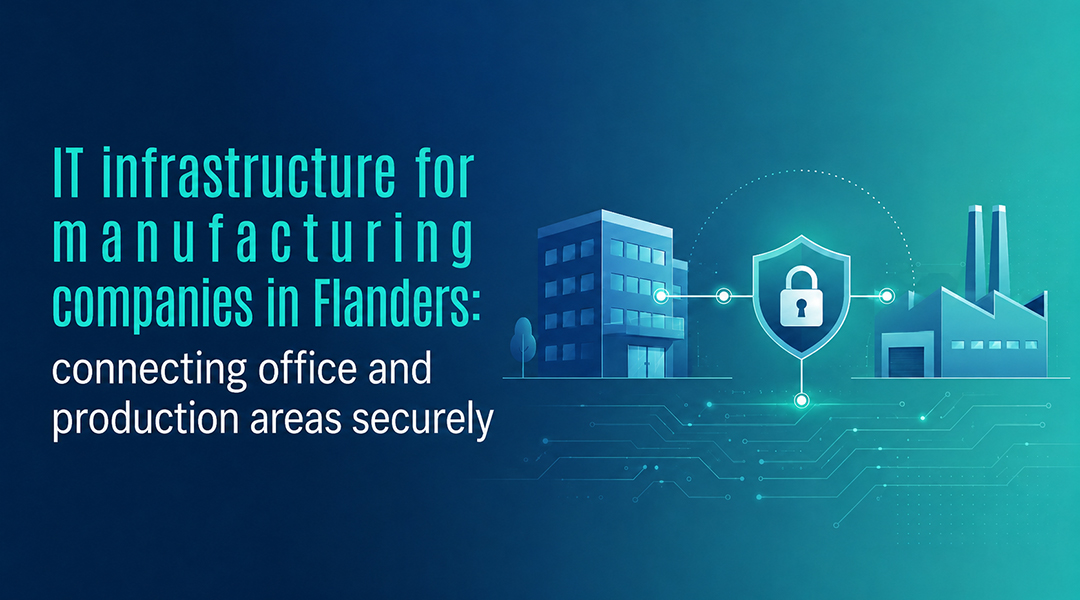
Manufacturers in Flanders generally manage two very different worlds. One side handles office tasks like planning and administration. The other runs the shop floor with machinery. These zones face different risks but still need to share data. Connecting them properly keeps the factory running and stops cyber attacks from spreading. By using network segmentation and backups, companies can link their office and production floors safely. This approach protects critical systems from the vulnerabilities that come with modern, interconnected manufacturing.
Why Do Office and Production Areas Require Different Network Zones?
Most security problems in a factory do not come from master hackers. They start with basic mistakes like a compromised email account or an infected laptop. Separating your network into zones limits the damage. If one area gets hit, the rest of the company stays safe. You can still let the office and production systems communicate, but only on your terms.
What Is Network Segmentation?
Network segmentation is the practice of breaking a network into smaller, isolated pieces to improve security. It is used when a company needs to keep critical production machines away from office traffic or guest users.
Instead of one big pool where everything touches everything else, you create specific zones. You might have one zone for office staff, another for production terminals, one for guest WiFi, and a separate path for suppliers. This is done with VLANs and firewall rules. If a breach happens in one spot, it will not automatically take down the whole plant.
How to Manage Secure Internet Access and Connectivity Between Zones?
When zones need to share data for things like printing or reporting, you need strict rules. Do not leave the door wide open.
- Use a central firewall to control all internet and site-to-site traffic
- Only allow the specific connections your business actually needs
- For remote maintenance or staff working from home, use secure VPNs
- Always keep your internal production network separate from the guest WiFi
Managing WiFi in Warehouses and Production Areas
Handheld scanners and tablets need a rock-solid wireless signal to work. Large warehouses are tough for WiFi because metal and long distances interfere with the signal.
- Use a professional design based on a real WiFi site survey to place access points correctly
- Segment your production WiFi from your guest network and use strong access controls
- Keep an eye on it with active monitoring so you can fix signal drops before they stop work
What Is Endpoint Security?
Endpoint security is the practice of protecting the devices that connect to your network, like laptops and office computers. A practical setup for a factory starts with software that can detect and respond to threats in real time.
- Your IT partner uses a single dashboard to see what is happening across all your devices
- Your IT partner keeps all your devices updated with regular patches to close security gaps
How Do Monitoring and Backup Reduce Downtime?
Business continuity is as important as staying secure. When something breaks, how fast you find it and fix it determines how much money you lose.
- A resilient setup uses real-time monitoring to track your servers and firewalls
- You need backups that alert you immediately if they fail
- Your recovery plan should match how much downtime your business can actually handle
Using Microsoft 365 for Secure Collaboration
Microsoft 365 handles your identity, email, and files. In a manufacturing setting, you need the right licenses for both office staff and shop floor workers.
- Use conditional access policies to keep identities secure
- Remember that cloud services are not a replacement for backups
- You still need a dedicated solution to protect your Microsoft 365 data
FAQ
Our production environment has never had a cyber incident. Why invest now?
Most risks come from daily IT tasks like email and remote access. Segmentation and monitoring keep a small problem from shutting down your entire production line.
What is the right approach to connect office and production?
Split your network into clear zones. Use firewall rules to only allow the specific communication those zones need to function.
Can WiFi work reliably in large production halls?
Yes. It just takes a good design for the specific space, proper segmentation, and constant monitoring.
What should we prioritize to limit downtime?
Focus on monitoring and managed backups. You must be able to catch an issue immediately and recover your data without delay.